
Posters
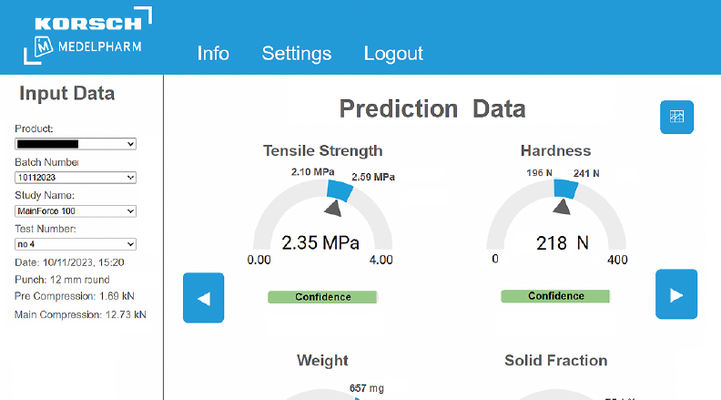
Development of solid oral dosage forms depends on timely knowledge of critical quality attributes (CQAs) such as tablet hardness, tensile strength, solid fraction, and tablet weight. These CQAs are traditionally obtained by destructive offline tests that consume material and slow down iteration.
A machine learning model was trained to predict these properties inline from process features during compaction. It enables faster screenings of blends and process settings while reducing reliance on destructive end-testing.
Comments
Add a comment
Articles you may like

Related products


Looking for additional information?
Let us help you
It's fascinating to see how AI-based predictions can streamline tablet formulation. Approaches like this really highlight how technology accelerates development without compromising accuracy. Tools that offer practical applications, similar to what I've seen in apps like https://3patti-super.pk/ make these innovations more accessible for everyday use
[HTML_REMOVED]It's fascinating to see how AI-based predictions can streamline tablet formulation. Approaches like this really highlight how technology accelerates development without compromising accuracy. Tools that offer practical applications, similar to what I've seen in apps like [HTML_REMOVED]3 patti super apk[HTML_REMOVED], make these innovations more accessible for everyday use[HTML_REMOVED]
It's fascinating to see how AI-based predictions can streamline tablet formulation. Approaches like this really highlight how technology accelerates development without compromising accuracy. Tools that offer practical applications, similar to what I've seen in apps like 3 patti super apk, make these innovations more accessible for everyday use
Great perspective on accelerating formulation development through AI-based monitoring. Inline predictive tools could really enhance consistency and quality control. The broader trend of AI-driven prediction—seen across industries, even on data-focused platforms like JeetBangla Bangladesh —shows how powerful real-time insights can be.
The integration of machine learning with tablet property prediction is a strong step toward smarter manufacturing. Reducing guesswork in early development can save both time and resources. It’s fascinating how predictive analytics, whether in pharma or platforms like BetVisa cricket betting continues to reshape decision-making frameworks.
I appreciate how clearly this explains the role of AI in improving formulation accuracy. Inline prediction seems like a game-changer for scaling pharmaceutical development efficiently. We’re seeing similar predictive logic being applied in other digital ecosystems too, even in platforms such as crickex app download where real-time data modeling drives performance.
[HTML_REMOVED]I appreciate how clearly this explains the role of AI in improving formulation accuracy. Inline prediction seems like a game-changer for scaling pharmaceutical development efficiently. We’re seeing similar predictive logic being applied in other digital ecosystems too, even in platforms such as crickex app download where real-time data modeling drives performance.[HTML_REMOVED]
I appreciate how clearly this explains the role of AI in improving formulation accuracy. Inline prediction seems like a game-changer for scaling pharmaceutical development efficiently. We’re seeing similar predictive logic being applied in other digital ecosystems too, even in platforms such as crickex app download where real-time data modeling drives performance.
Really insightful read. The idea of using AI for inline prediction could significantly cut down formulation cycles and reduce material waste. It’s interesting how predictive modeling is transforming such traditionally trial-heavy processes—almost similar to how data-driven platforms like crickex casino rely on predictive systems for real-time decision optimization.
Really insightful read. The idea of using AI for inline prediction could significantly cut down formulation cycles and reduce material waste. It’s interesting how predictive modeling is transforming such traditionally trial-heavy processes—almost similar to how data-driven platforms like crickex casino rely on predictive systems for real-time decision optimization.
This article really highlights how AI can speed up complex processes like tablet formulation—it's fascinating to see predictive models being applied in such a practical way. It also makes me think about how important it is to have reliable software tools for research and testing. For those experimenting with simulations or analysis, resources like KMSpico Download can sometimes help manage software activation for legitimate lab tools, ensuring everything runs smoothly.
Great read—using AI-based inline prediction to anticipate tablet properties is a smart way to cut down trial-and-error during formulation development. The focus on real-time data integration really highlights how development timelines can be accelerated without compromising quality. I’ve seen similar approaches add a lot of efficiency in early-stage optimization; for anyone exploring practical implementations, this resource might be useful: Try It Here.
"Interesting insights on predicting tablet properties to speed up formulation development. Tools that streamline data analysis can make a big difference—for instance, I recently used a lightweight utility that helped me manage related datasets efficiently (you can Download 3uTools for Windows to explore similar functionality). Thanks for sharing these practical strategies!"
"Really insightful post! Predicting tablet properties early can drastically speed up formulation development. Tools like Fluxus latest version seem to complement this approach by providing more precise simulations, which can save both time and resources."
"Interesting insights on using AI for predicting tablet properties—it's impressive how much time this can save in formulation development. I recently explored a tool that streamlines testing workflows in a similarly efficient way, which you can check out here: Clownfish Voice Changer PC. It’s fascinating to see technology accelerating traditionally slow processes!"
This is a well-detailed post on how AI-driven inline prediction can transform pharmaceutical formulation processes. The ability to optimize tablet properties in real time is a major step toward efficiency and precision. I’ve been exploring similar innovations in data-driven systems, and this approach truly aligns with the future of smart development. Great insights! — bitlifeapkmods
This is a well-researched piece highlighting how AI can revolutionize pharmaceutical formulation by improving prediction accuracy. Integrating such predictive models truly accelerates R&D efficiency. I recently came across similar optimization techniques discussed on carxstreetsmodapk, which also emphasize how data-driven approaches enhance performance across industries.
This article presents a fascinating look into how AI can revolutionize pharmaceutical formulation processes. Integrating predictive models for tablet properties could significantly reduce development time and enhance precision. I recently explored a similar AI-driven concept while analyzing automation efficiency through bloxstrappc, and it’s impressive to see how predictive technology continues to evolve across different industries.
Great post! The use of AI for predicting tablet properties is a fascinating step toward smarter pharmaceutical formulation. It’s interesting to see how data-driven tools are transforming traditional research workflows — similar to how platforms like gettorrentio leverage intelligent automation to streamline user experiences in their own fields.