
Scientific papers
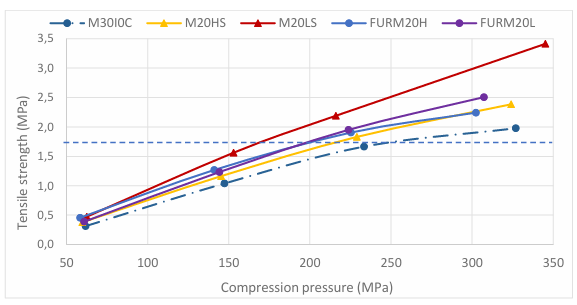
High-shear wet granulation involves numerous adjustable process parameters, with optimal settings depending strongly on formulation composition. Lactose monohydrate (LMH) and microcrystalline cellulose (MCC) are commonly used as fillers in wet granulation formulations and are often combined due to their complementary properties. Among the critical process parameters, the liquid-to-solid (L/S) ratio plays a key role in determining granule and tablet quality. A mixer torque rheometer (MTR) can be used to estimate the L/S ratio required for granulation by monitoring changes in torque during liquid addition. This study investigated how the interpretation of MTR measurements and selected granulation process parameters affect granule and tablet attributes across different LMH–MCC formulations. A full factorial design of experiments was conducted using three independent variables at two levels: LMH:MCC ratio, the point used to determine the L/S ratio from the MTR torque curve, and liquid addition rate, with three replicated centre points. The effect of impeller speed was additionally investigated in two batches. MTR experiments were performed for each formulation, including an assessment of the effect of liquid addition rate during the measurements. The L/S ratios for subsequent granulation were determined from the MTR data using the second derivative of the torque curve. Wet granulation was performed in 1 kg batches, followed by fluid-bed drying and tablet compression. Granules were characterized in terms of size distribution, flow properties, and morphology, while tablets were evaluated for tensile strength, mass variation, friability, and disintegration time. In addition, two batches containing 7.5% furosemide were produced to assess dissolution and content uniformity. Granules and tablets were successfully produced using L/S ratios estimated from MTR measurements. The LMH:MCC ratio significantly affected both granule and tablet properties. Increasing the MCC content resulted in higher maximum torque and greater liquid requirements in the MTR, larger and smoother granules, reduced tabletability, and longer disintegration times. At the highest MCC level tested (40% of the total filler content), the tablets did not consistently achieve the required tensile strength. Increasing the L/S ratio produced similar effects, whereas liquid addition rate had no significant impact on the investigated responses, possibly because the range evaluated was relatively narrow. Overall, the results suggest that a lower MCC content (20% of the total filler content) is more favourable for wet granulation in the formulation studied. The use of the second derivative of the MTR torque curve was suitable for estimating the L/S ratio; however, the poorer granule and tablet properties observed at higher MCC levels raise the question of whether the MTR data should be interpreted differently for formulations with high MCC content. These findings highlight the usefulness of MTR as a tool for estimating granulation liquid requirements, while also suggesting that the optimal interpretation of MTR measurements may be formulation-dependent, potentially limiting the development of a universal model for L/S ratio prediction.
Comments
No comments posted yet.
Add a comment
Articles you may like

Related products



Looking for additional information?
Let us help you