
Scientific papers
Pharmaceutical excipients are indispensable in the development of dosage forms, where they contribute to functions such as particle binding, disintegration, stability, and improved patient acceptability. Among the most widely used excipients, microcrystalline cellulose (MCC), dibasic calcium phosphate dihydrate (DCPD), and partially pregelatinized corn starch (PGS) play a key role in the formulation and manufacturing of pharmaceutical products. Despite their extensive use, comprehensive reference datasets describing their physical and mechanical properties are not readily available.
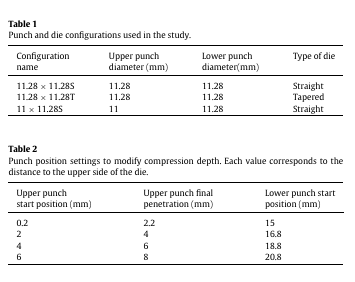
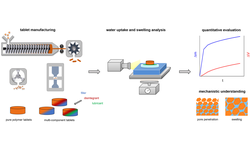
This study presents a detailed dataset for MCC, DCPD, and PGS, including extensive characterization of individual particles, such as particle size, morphology, and crushing behavior. Tablets were produced from the pure excipients and selected blends using a compaction simulator, followed by a broad range of mechanical evaluations. By combining particle-level and tablet-level measurements, the dataset provides valuable benchmark information for pharmaceutical researchers, formulation scientists, process engineers, and educators involved in drug product development.
Comments
No comments posted yet.
Add a comment
Articles you may like


Related products



Looking for additional information?
Let us help you