
Scientific papers
**Background:** Compaction of formulation blends is a crucial step in pharmaceutical tablet manufacturing, especially when drug substances or functional excipients have limited flowability and tabletability.
**Objectives:** This study systematically investigated the mechanical behavior of viscoelastic microcrystalline cellulose (MCC), brittle anhydrous dibasic calcium phosphate (DCPA), and their mixtures to understand how different deformation mechanisms affect powder handling and tablet performance.
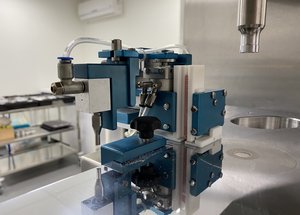
**Methods:** Using a compaction simulator that replicates a small rotary tablet press, we evaluated tablet weight variability, densification profiles, die-filling height, force–displacement curves, and in-die Heckel analysis. Additional tests measured compression time, breaking force, tensile strength, elastic recovery, and both in-die and out-of-die tablet thickness across varying compositions and compaction pressures.
**Results and Conclusions:** Bulk density measurements from the simulator showed excellent correlation with pharmacopeial standards (R² ≥ 0.997). MCC exhibited poor flowability due to differences in true density and cohesiveness, whereas DCPA demonstrated good flow; mixtures with higher DCPA content showed significantly improved flow properties. Compaction analysis confirmed that MCC undergoes plastic deformation while DCPA primarily fragments. Increasing MCC content led to higher die-fill heights, compaction energy, and tablet weight variability, whereas greater DCPA proportions lowered tablet apparent density and reduced energy requirements. Tabletability and compressibility profiles revealed MCC produces hard tablets with higher elastic recovery, while DCPA forms softer tablets with nearly linear strength–pressure responses. Energy analysis showed MCC stores more elastic energy and demands greater compression work, whereas DCPA reduces elastic energy accumulation. Overall, blending viscoelastic and brittle excipients provides a robust approach to optimize manufacturability, mechanical strength, and energy efficiency in tablet production.
Comments
No comments posted yet.
Add a comment
Articles you may like

Related products



Looking for additional information?
Let us help you